
“I hope that the work started can continue to strengthen the role of territories and municipalities, making them protagonists of an integrated vision of development.

The memorandum of understanding signed between the Lazio Region and ANCI Lazio, with the technical support of FIAB, is part of this furrow. It is a strategic tool aimed at promoting shared governance and supporting municipalities in the development of green infrastructures and cycling/pedestrian mobility. The agreement aims at strengthening the administrative capacity of local authorities, coordinating territorial policies and creating an integrated network of sustainable routes, also through targeted actions of technical assistance, communication and planning.
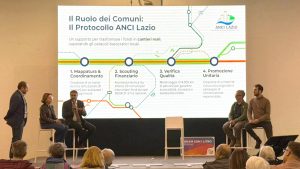
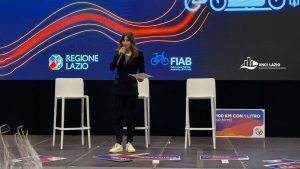
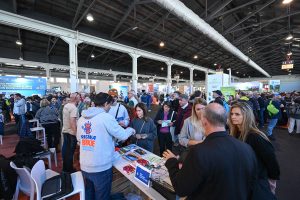
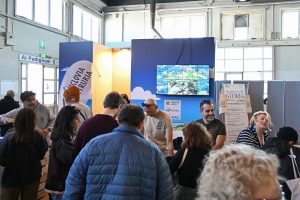
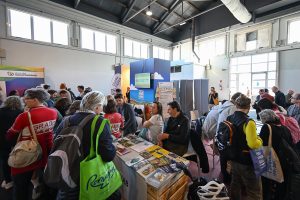
The talk took place within the framework of the Cycling Tourism Fair, hosted at the Padua Exhibition Centre and spread over three days, a reference appointment for institutions, operators and territories involved in the promotion of soft mobility and sustainable tourism. In this context, institutions and associations discussed the future of cycle tourism and the role of municipalities.
Strongly emphasising this perspective was the President of ANCI Lazio, Daniele Sinibaldi, which highlighted the need to bridge the gap between institutional levels, particularly between the Region and the municipalities, especially the smaller and peripheral ones. The objective is to build an inclusive development model, capable of bringing together the territory's potential.
In this vision, Rome represents a strategic opportunity rather than a limitation: a starting point to intercept international tourist flows and redistribute them throughout the region, creating effective connections with villages and inland areas.
President Sinibaldi also recalled the operational work started by ANCI Lazio, also through a structure dedicated to mapping the missing sections of the cycle paths. An activity that translates into concrete support for municipalities, from the identification of tenders to the construction of strategies to attract investment and build sustainable infrastructure.
The contribution of Roberto Battista, for the Lazio Region, gave an overview of the investments made, emphasising the value of cycle-tourism routes for the development of the region. Also highlighted was the importance of innovative tools such as the Map.pic digital platform, designed to support data-driven decisions in planning cycling and cycling infrastructure.
A long-term vision was reaffirmed by Luigi Menna, president of FIAB Lazio, who recalled the path shared with the Lazio Region and ANCI Lazio, also dwelling on the prospect of route certification according to European standards such as EuroVelo.
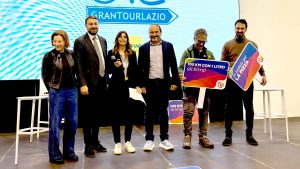
Claudio Mancini instead focused on the Grand Tour of Lazio, an itinerary of about 1,000 kilometres in 18 stages, built by exploiting rail-bike intermodality and making use of existing infrastructure to a large extent.
A shared line emerges from the discussion: strengthening collaboration between institutions and territories to transform sustainable mobility policies into concrete opportunities for local development and enhancement. In this framework, the role of ANCI Lazio is consolidated as a connecting element and operational support for municipalities.