At the ANCI National Assembly in Verona, the discussion promoted by Federsanità ANCI Lazio on the centrality of local authorities in health planning, the strengthening of proximity services, and the integrated care of citizens.
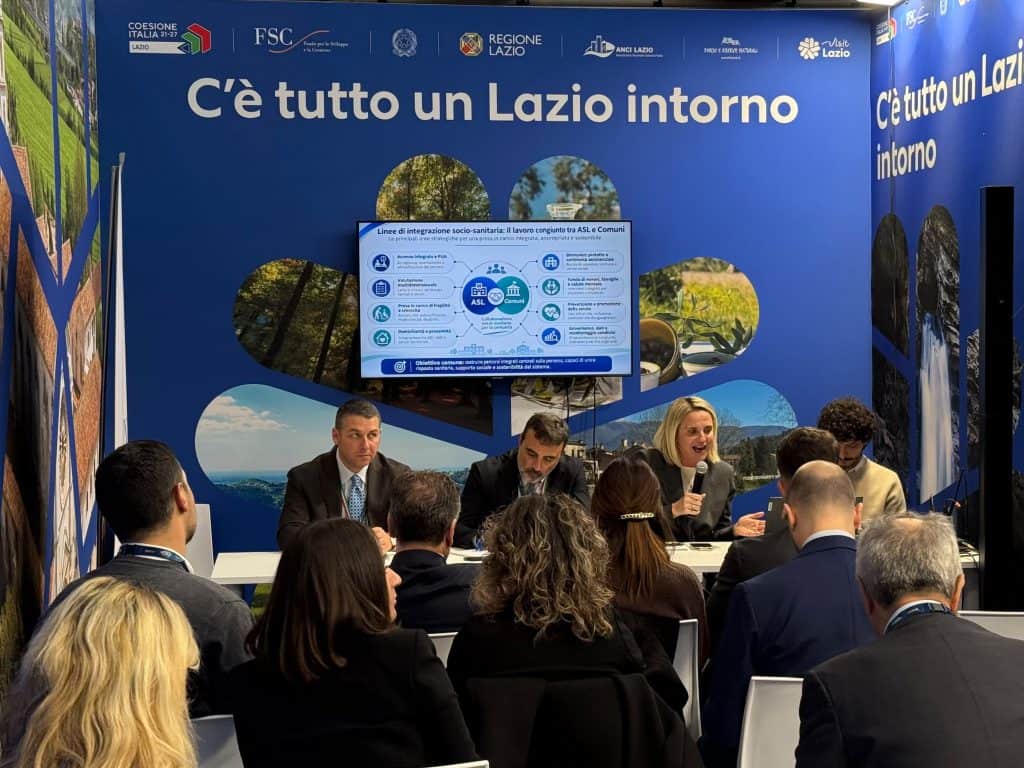
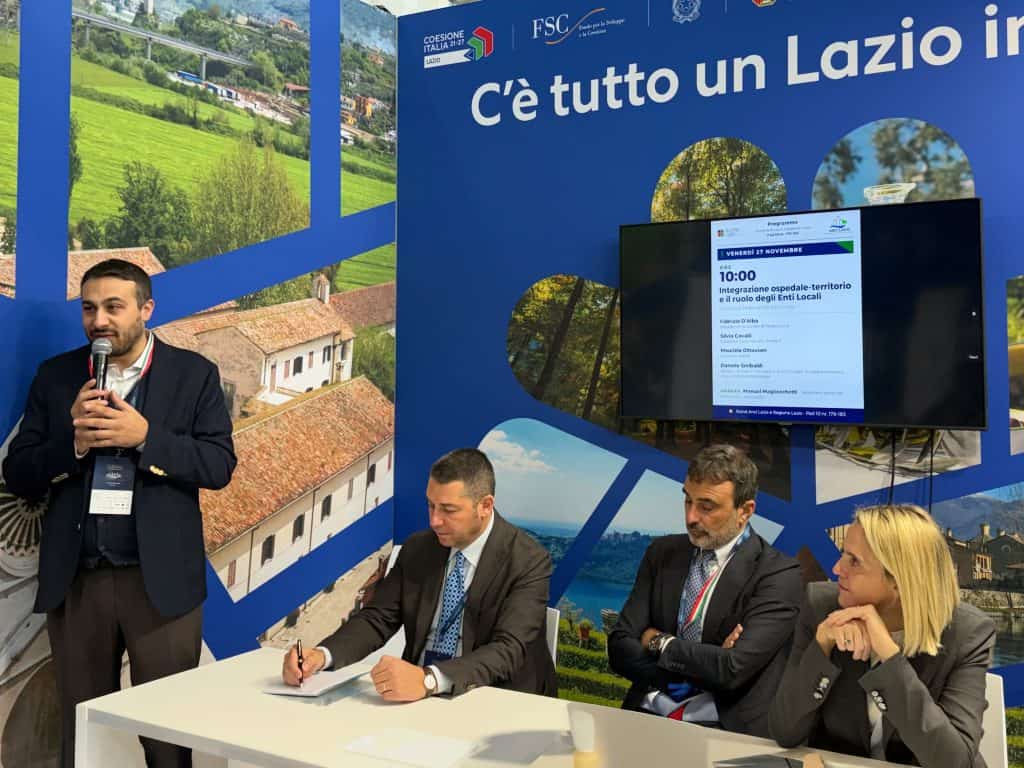
The last day of events at the ANCI Lazio – Regione Lazio stand opened this morning, Friday 27 November, as part of the 43rd ANCI National Assembly in Verona, with the panel “Hospital-Territory Integration and the Role of Local Authorities”, organized by Federsanità ANCI Lazio.
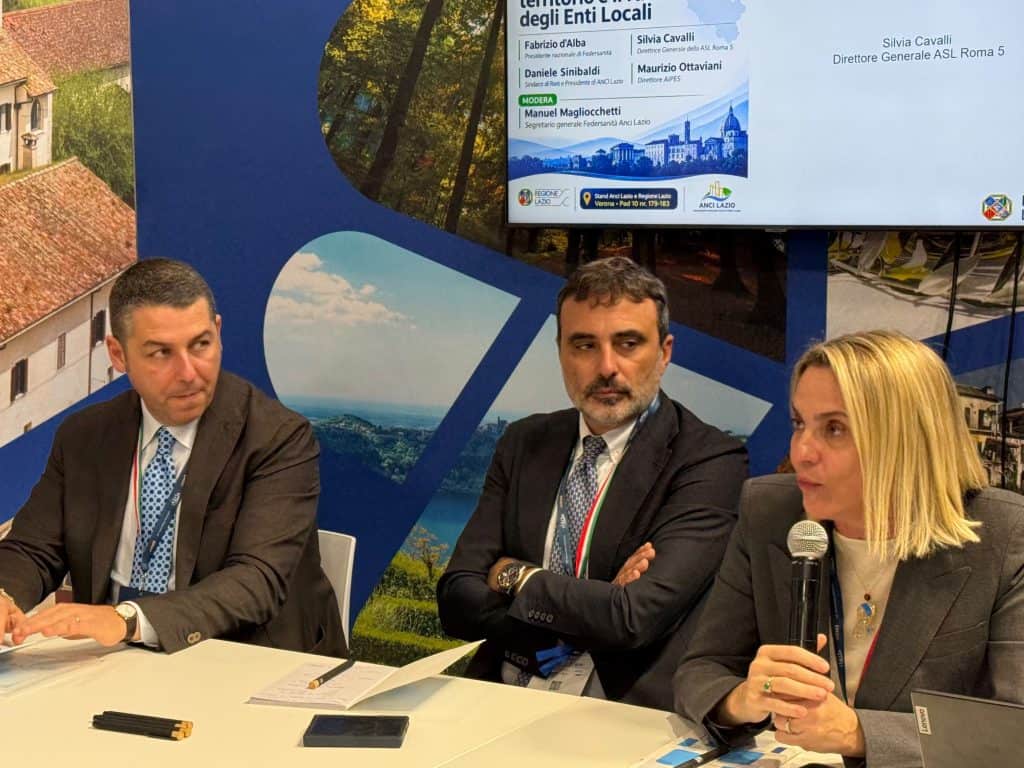
The meeting, moderated by Manuel Magliocchetti, General Secretary of Federsanità ANCI Lazio, was attended by Fabrizio D’Alba, National President of Federsanità, Silvia Cavalli, General Director of ASL Roma 5, and Daniele Sinibaldi, President of ANCI Lazio and Mayor of Rieti, representing the local administrators.
At the heart of the discussion is the strategic role of municipalities in the qualification of health and social services, through an increasingly structured collaboration with healthcare companies. Local administrations, thanks to their direct knowledge of the territories and the needs of communities, represent an essential interlocutor in the definition of health policies, the programming of interventions, and the organization of services at the local level.
The presence of Fabrizio D’Alba, National President of Federsanità, enriched the discussion with a national perspective, focusing on the value of collaboration between the healthcare system and local authorities. In a context of profound reorganization of territorial healthcare, the role of Federsanità assumes strategic importance in promoting dialogue between healthcare companies and municipal administrations, fostering shared planning and contributing to the qualification of services, so that they are increasingly close to citizens and responsive to the needs of the territories.
During her presentation, Silvia Cavalli outlined the experience of ASL Roma 5, which operates in a territory comprising 70 municipalities, six health districts, and a population of nearly 494,000 inhabitants. Particular attention was paid to the organizational model of the Community Houses, structured into a network of 20 facilities, including eight Hubs and twelve Spokes, designed to ensure integrated, continuous, and close-to-the-people care. During the period from September 1st to October 15th 2026, the Community Houses of ASL Roma 5 recorded over 33,000 visits.
The Director General also deepened the implementation process of the interinstitutional convention on socio-health integration, which recognizes the participation of municipalities as an essential component for the shared assessment of needs, the definition of care pathways, and the coordinated activation of interventions. Co-programming and co-design between healthcare organizations, local authorities, socio-health districts, and consortiums represent fundamental tools to overcome the fragmentation of services and ensure truly person-centered care.
A collaboration that takes on even more significant value in small municipalities and rural areas, where the distance from hospital facilities, the aging population, and the difficulties in accessing services make greater involvement of local governments in the development of care responses necessary.
The meeting confirmed the importance of the joint work between ANCI Lazio and Federsanità ANCI Lazio to strengthen the centrality of mayors and municipal administrations in health policies. Valuing the role of the municipalities means qualifying the entire healthcare system, making it more close to citizens, more responsive to the needs of the territories, and more capable of ensuring equity in access to care and services.