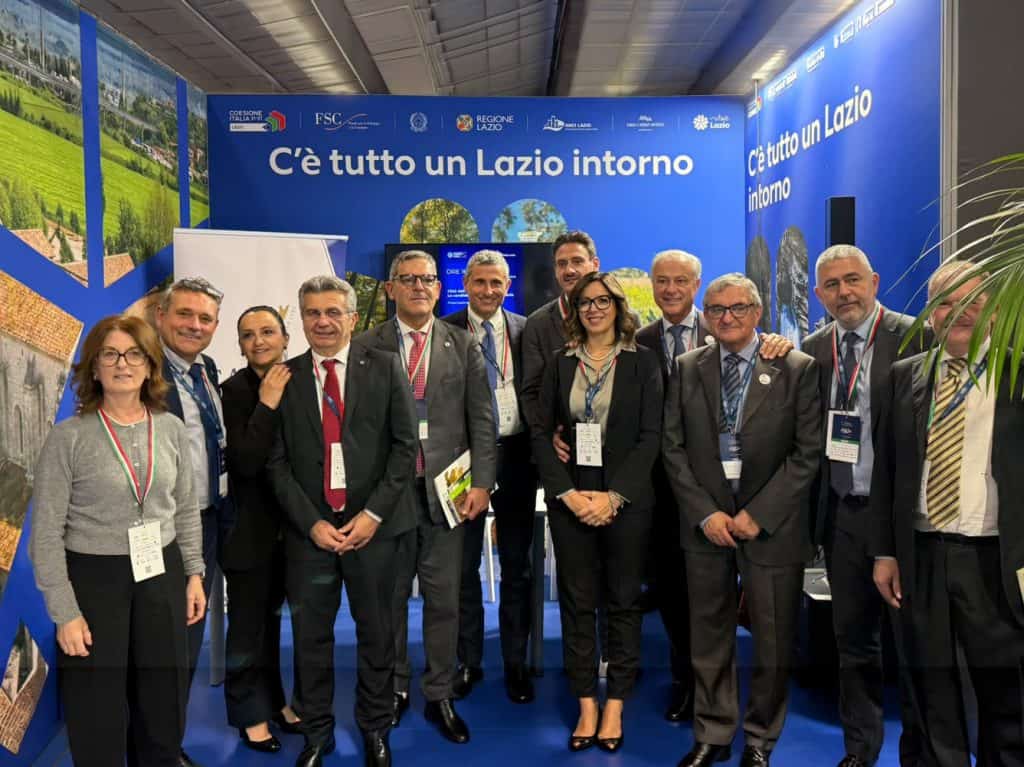
Castelli Romani, Tivoli and Guidonia Montecelio and Cassino were the protagonists of the meeting organized at the ANCI National Assembly in Verona to enhance the cultural projects of the territories and promote collaboration between local administrations.
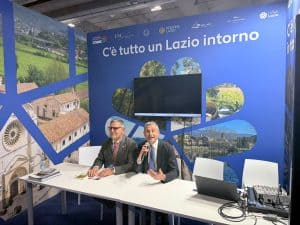
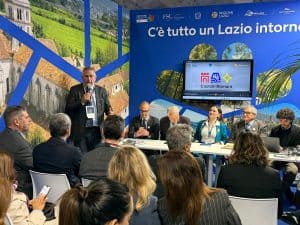
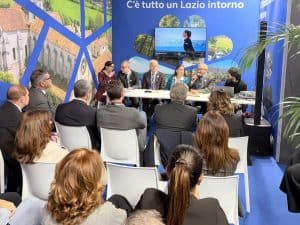
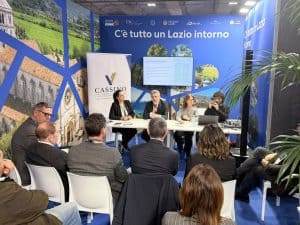
As part of the 43rd National Assembly of ANCI, which is taking place in Verona, ANCI Lazio dedicated a specific meeting to the presentation of the three candidacies of the Lazio territories for the title of Italian Capital of Culture 2029. The meeting, held in the afternoon of Thursday, November 26, at the stand shared with the Lazio Region, represented an important opportunity to bring to the attention of the national scene the projects of Castelli Romani, Tivoli and Guidonia Montecelio, and Cassino.
The initiative stems from ANCI Lazio’s desire to support and accompany the municipal administrations engaged in this process, offering a space for discussion and visibility to the candidates and enhancing the richness and diversity of the region’s historical, artistic, and cultural heritage.
Castelli Romani | Castelli Domani
The candidacy of the Castelli Romani, promoted by the Consorzio Sistema Castelli Romani, brings together for the first time the seventeen municipalities of the territory in a single dossier, representing a community of over 350,000 inhabitants.
The project, named “Castelli Romani | Castelli Domani”, aims to combine the historical, archaeological, landscape and gastronomic heritage with scientific research, innovation and the ability to develop shared development strategies.
In Verona, the candidacy was presented by the President of the Castelli Romani System, Giuseppe De Righi, and the Mayors of Marino, Stefano Cecchi, of Nemi, Alberto Bertucci, and of Lanuvio, Andrea Volpi, in the presence of Metropolitan Councilor Marta Elisa Bevilacqua and the Destination Manager of the Castelli Romani DMO, Simona Ottaviani.
Tivoli and Guidonia Montecelio – Culture at stake
With the project “La cultura in gioco” (Culture at Stake), the candidacy of Tivoli, presented in Verona together with Guidonia Montecelio, represents another opportunity to enhance the cultural, archaeological and landscape heritage of this important area of Lazio.
A territory characterized by the presence of historical testimonies of extraordinary value, starting with the UNESCO sites of Villa Adriana and Villa d’Este, which can use culture as a tool to strengthen tourism attractiveness, community participation and collaboration between local administrations.
Cassino – Now, Labora, Law. The Method of Culture
The candidacy of Cassino takes on a special significance in view of 2029, the year in which the 1,500th anniversary of the foundation of the Abbey of Montecassino and the 50th anniversary of the activities of the University of Cassino will be celebrated.
The project “Ora, Labora, Lege. The Method of Culture” draws inspiration from the legacy of Benedictine monasticism, intertwining spirituality, work and knowledge with a vision of cultural and social development of the territory. A candidacy built through the involvement of institutions, the Abbey, the University, schools, associations and the productive world, which also enhances Cassino’s identity as a city symbol of peace, memory and renewal.
The path to becoming the Italian Capital of Culture in 2029
A total of sixteen applications have been submitted to the Ministry of Culture at the national level, three of which come from Lazio. By December 16, 2026, the ten finalists will be selected, who will participate in the public hearings scheduled for March 10, 2027. The announcement of the winner is expected by March 25, 2027, with the allocation of a contribution of one million euros for the implementation of the cultural project.
The presence of three Lazio-based candidates testifies to the cultural vitality of the region and the ability of the municipalities to develop ambitious projects, involving institutions, associations, businesses, and citizens.
With the Verona event, ANCI Lazio wanted to reaffirm its support for all three territories, aware that, regardless of the outcome of the selection process, these paths represent an important opportunity to consolidate territorial networks, promote new forms of intercommunal collaboration, and build growth strategies based on culture.