

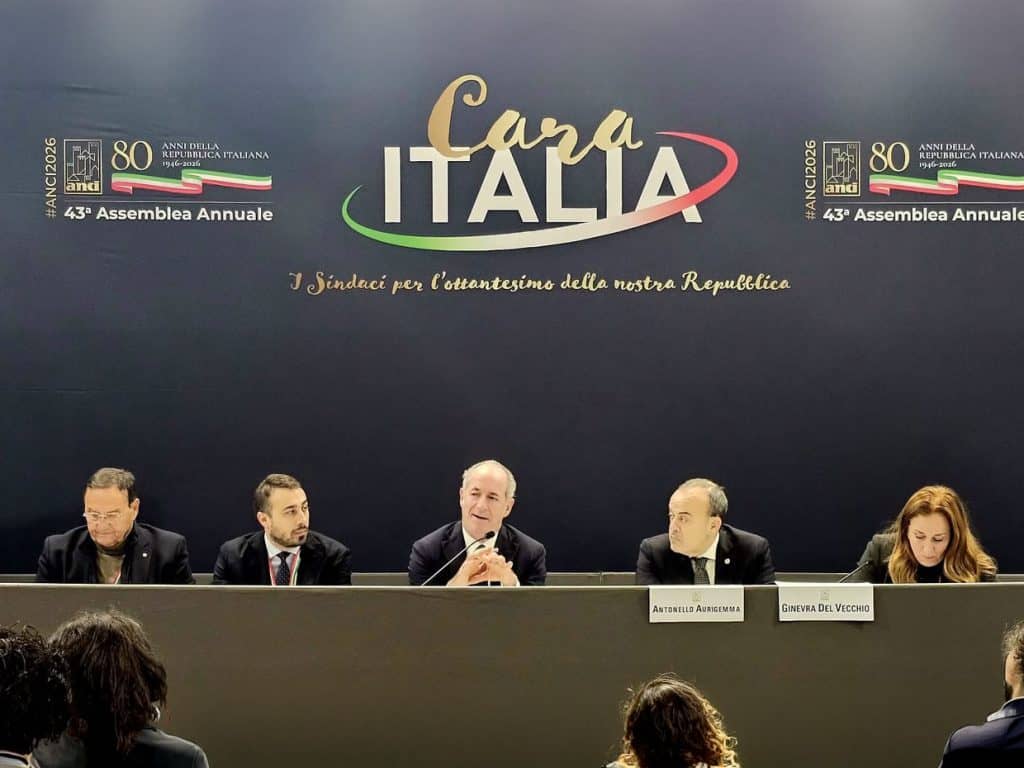
President Daniele Sinibaldi explains the model of collaboration with the Lazio Region, emphasizing the importance of the participation of the territories and the strengthening of administrative capacity.
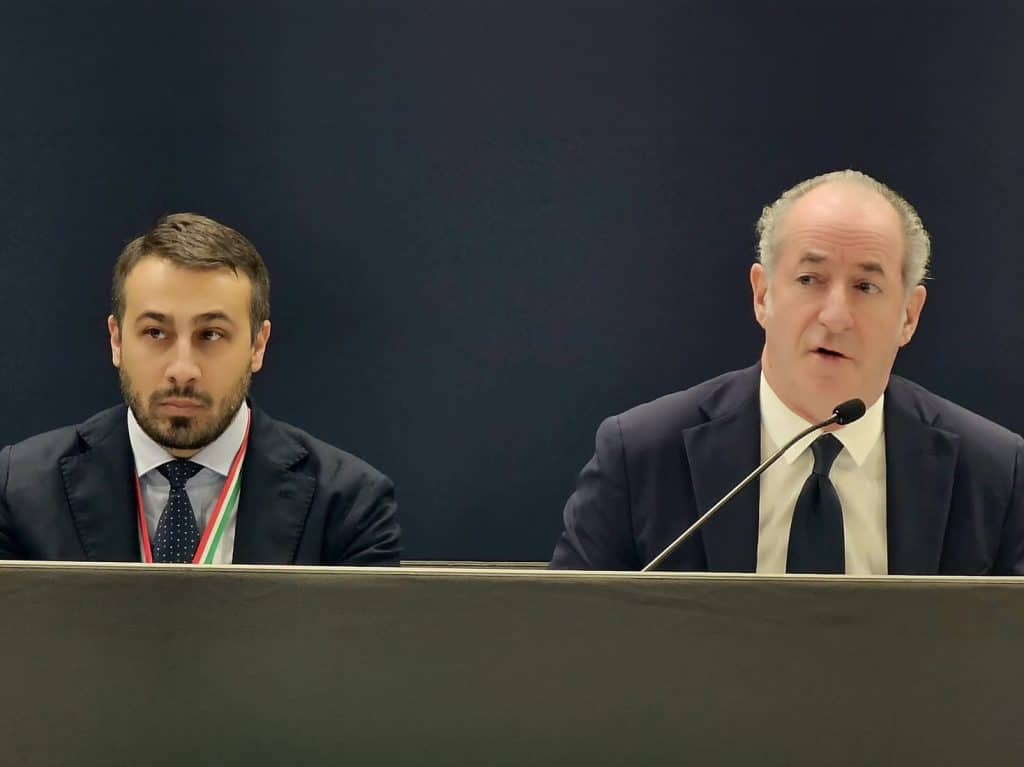
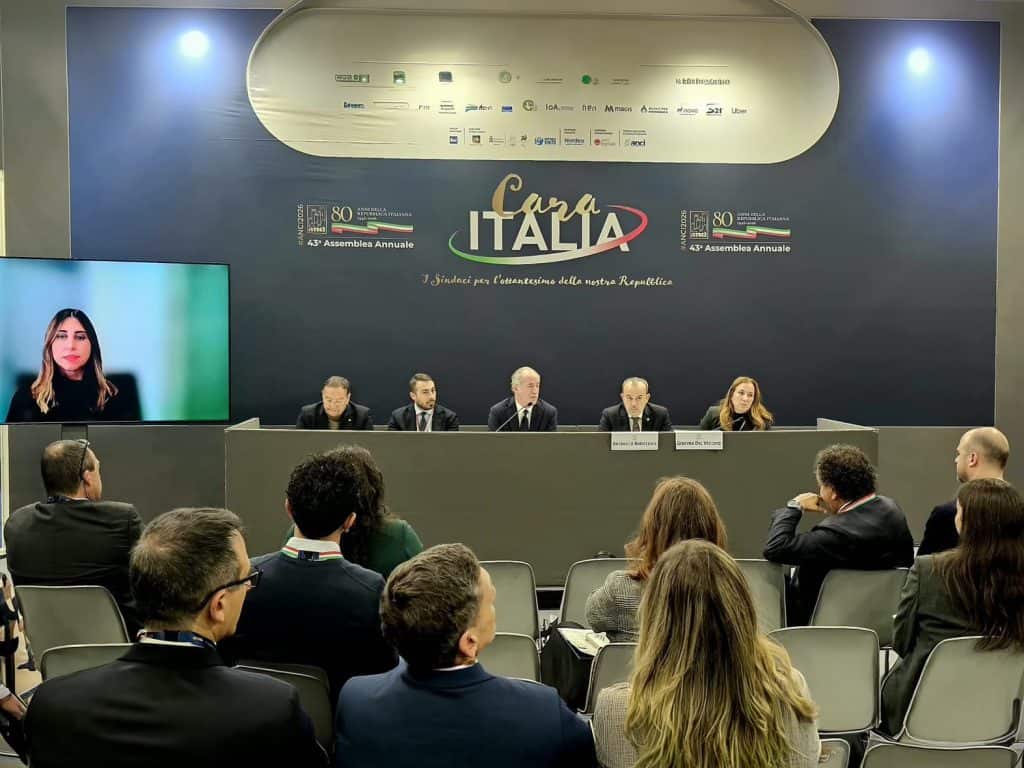
As part of the 43rd National Assembly of ANCI, which is taking place in Verona, the meeting “Cities at the Heart of a Changing Europe” was held, dedicated to the strategic role of cities and regions in the new season of European policies, with particular attention to competitiveness, territorial cohesion, and the development prospects of local communities.
Among others, they took part in: President of ANCI Lazio and Mayor of Rieti Daniele Sinibaldi, the President of the Veneto Regional Council Luca Zaia, the President of the Lazio Regional Council Antonello Aurigemma and the Mayor of Fiumicino Mario Baccini. At the heart of the debate is the need to recognize the increasingly important role of local administrations in defining European policies and in the ability to translate the opportunities offered by the European Union into concrete interventions for the territories.
During his speech, President Sinibaldi emphasized the importance of making the municipalities directly involved in the new European programming, by leveraging the experience gained with the PNRR. This change of approach will require local authorities to be seen not only as the entities implementing the interventions, but also as active partners in decision-making processes and the definition of investment priorities.
Particular attention has been paid to the experience of Lazio and the new model of collaboration between the Region and ANCI Lazio, as illustrated by Sinibaldi, which provides for a structured relationship in the definition of territorial development strategies. In this perspective, the Region assumes a role of cohesion and programming, going beyond mere resource management, while ANCI Lazio plays a coordinating role in gathering the needs expressed by the municipalities and local communities.
A model that is already finding practical application in the process of the ten territorial conferences for the 2028-2034 unitary programming, promoted by the Lazio Region and organized by ANCI Lazio. After the first two events in Viterbo and Rieti, the process will continue until March, involving local administrators, institutions, associations, and representatives of the economic and social fabric, with the goal of building a shared programming based on listening to the real needs of the territories.
Sinibaldi also called for addressing the challenge of the vast area, overcoming the logic of bell towers and promoting greater collaboration between municipal administrations. In this perspective, the ability to think in terms of contiguous and homogeneous territorial areas represents a fundamental condition for planning investments and services based on the actual needs of communities, going beyond individual administrative boundaries.
Another central theme of the intervention was the administrative capacity of local authorities, an essential element to ensure the effective implementation of development policies and the use of European resources. The President highlighted how the wage gap between the local authorities sector and that of central administrations contributes to the loss of professionalism and skills within municipalities. This is why there is a need for a policy of salary re-equipping that allows local authorities to attract and retain qualified staff, ensuring the availability of the human resources necessary to address the challenges of the new programming.
President Sinibaldi’s intervention brought the experience gained in Lazio to the attention of the debate, emphasizing the need to strengthen the role of the municipalities, collaboration between the different levels of government, and the administrative capacity of the territories, so that the next season of European policies can translate into concrete opportunities for growth and development for local communities.