The President of ANCI Lazio highlights the role of medium-sized cities in combating depopulation, the need to revise the criteria for allocating resources to municipalities, and the importance of structural policies for the prevention and security of territories.
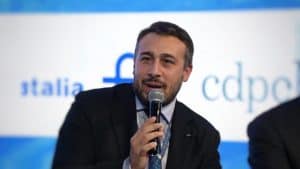
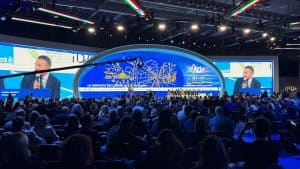
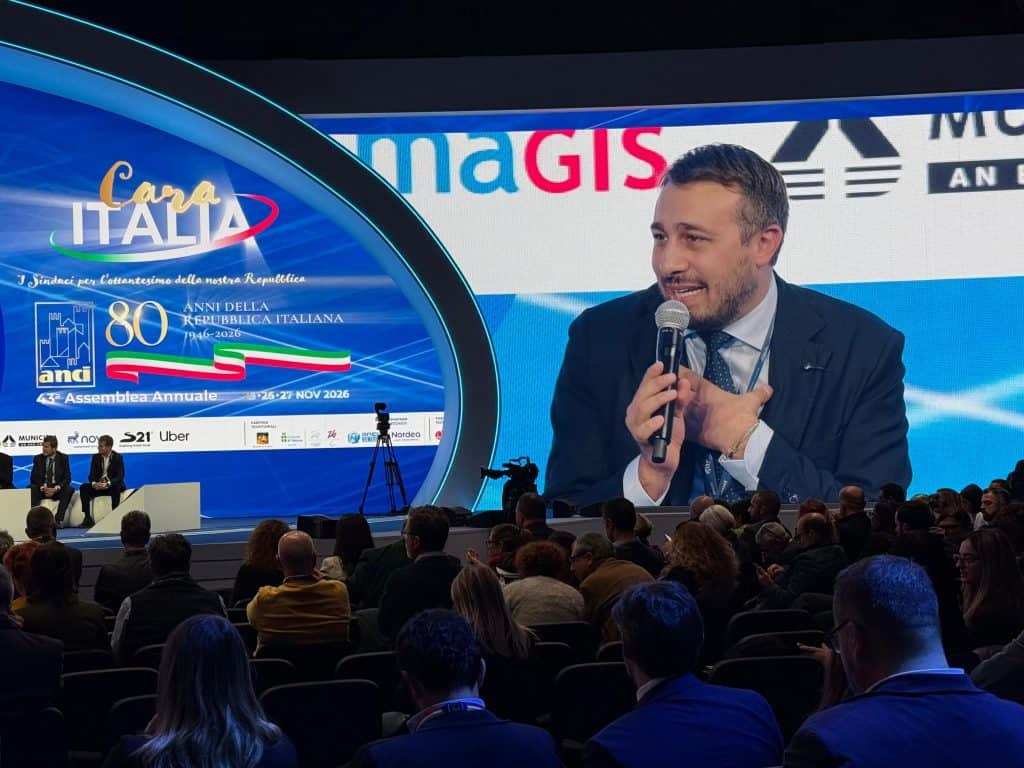
During the 43rd National Assembly of ANCI, taking place in Verona, the President of ANCI Lazio and Mayor of Rieti, Daniele Sinibaldi, spoke at the panel “The response of municipalities to the new climate – Water, energy and waste: rules and investments”, dedicated to the challenges that local administrations are called upon to face in the field of environmental sustainability, resource management and investment planning.
The meeting, moderated by RAI journalist Incoronata Boccia, saw the participation of Daniele Sinibaldi, President of ANCI Lazio and Mayor of Rieti, Enzo Lattuca, Mayor of Cesena and President of UPI, Giuseppe Mascia, Mayor of Sassari, Silvia Salis, Mayor of Genoa, Massimo Zedda, Mayor of Cagliari, Fabrizio Palermo, CEO of Acea, Aldo Chiarini, President of City Green Light, Fabio Costarella, Deputy General Director of CONAI, Luca Dal Fabbro, President of Gruppo Iren, and Federico Testa, President of Gruppo Magis.
During his speech, Sinibaldi called for greater emphasis on medium-sized cities in the national debate, highlighting their role as hubs for smaller municipalities and their strategic role in combating depopulation. This experience is particularly significant in the province of Rieti, which has 73 municipalities, of which only the capital city has a population of over 15,000 inhabitants, representing a point of reference for policies covering the entire area, from land maintenance to waste management and water services.
The President highlighted the contradiction between the predominantly demographic criteria used to determine the economic resources and staffing of local authorities and the responsibilities of the mayors, who are called upon to administer territories that are often very extensive and complex. In this regard, he drew attention to the example of the Peschiera aqueduct, a strategic infrastructure for the region of Rieti, fundamental for the capital’s water supply.
«We administer a territory not only for the citizens who live there, but we administer a territory in a complex system that is necessarily interconnected», emphasized Sinibaldi, highlighting the need to introduce criteria for allocating resources that also take into account the geographical and territorial characteristics of the municipalities.
Particular attention was paid to the theme of prevention and safety, drawing on the experience of the 2016 earthquake, which links the region of Rieti to numerous municipalities in the four regions of the Central Apennine Range. Sinibaldi emphasized the need to complement extraordinary reconstruction tools with structural prevention policies, through stable funds intended for the maintenance and securing of territories most exposed to natural hazards, whose fragility can be further exacerbated by the effects of climate change.
Among the examples cited is that of the road network of the Municipality of Rieti, which extends over approximately 1,000 kilometers of municipal roads. This is a significant responsibility for a medium-sized city, especially regarding the safety of connections with rural, mountainous areas and the hamlets, which further highlights the need for resources commensurate with the actual needs of the territories.
The intervention of President Sinibaldi placed the need to rethink the tools available to local administrations at the center of the national debate, recognizing the strategic role of medium-sized cities and the interior areas and ensuring that all citizens have equal conditions of safety and quality of services, regardless of where they live.